
Cleaning your home’s exterior is more than cosmetic—it protects your surfaces and prepares them for repainting. In New Hampshire, homeowners are increasingly searching for safe, effective, and NH‑optimized solutions. Here’s everything you need to know.
What’s the Difference? Soft Wash vs. Pressure Wash
Soft Washing
- Method: Low-pressure water (150–300 PSI) combined with cleaning agents like sodium hypochlorite and surfactants
- Best For: Delicate surfaces—wood, vinyl siding, roof shingles, stucco, painted trim—where high pressure can strip coatings or damage materials
- Pros:
- Gently removes mold, mildew, algae, and biofilm.
- Leaves fungicidal residue for long-lasting protection.
- Cons:
- Chemicals can alter paint pigments—especially reds, blues, and greens—so always test a small area first
- May require repeat treatments for heavy buildup.
Pressure Washing
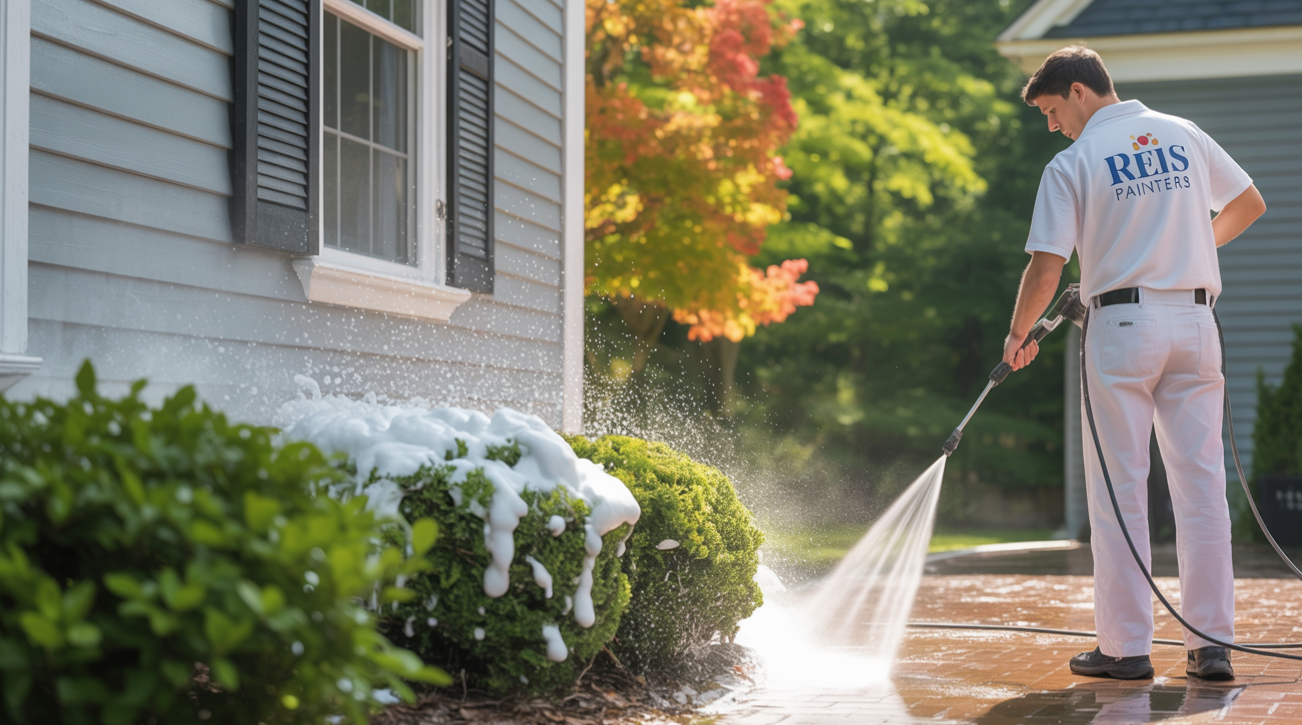
- Method: High-pressure water (1,300–3,000+ PSI) with or without detergents
- Best For: Hard surfaces—concrete driveways, stone patios, brick walls, untreated decks.
- Pros:
- Fast, powerful cleaning removes dirt, grime, loose paint, and moss.
- Ideal for prepping surfaces for refinishing or sealant application.
- Cons:
- Too much pressure can harm softer materials or gouge paint and wood
- Risk of blasting water under siding or into joints, which can lead to moisture damage.
When Should You Use Each Method?
➤ Best Seasons: Spring & Fall
- Spring (after winter buildup): ideal for cleaning salt, mold, and grime before summer projects or painting prep
- Fall (preparing for winter): perfect for final cleaning of leaves, pollen, and summer debris before freezing weather arrives
➤ NH‑Specific Considerations
- Avoid winter: freezing temps risk trapped moisture freezing and damaging wood, siding, or foundation
- Avoid extreme heat or humidity: water dries too quickly, leaving streaks or uneven results.
✅ Surface Suitability: Which Method for Which Job?
| Surface Type | Best Method | Notes |
|---|---|---|
| Vinyl, cedar, stucco siding | Soft Wash | Protects paint, prevents damage |
| Roof shingles | Soft Wash | Avoids granule loss or shingle damage |
| Concrete, brick, asphalt | Pressure Wash | Effective for hard, durable surfaces |
| Decks & unfinished wood | Pressure Wash | Good for prepping before staining |
| Painted trim, windows, doors | Soft Wash (Test first) | Prevent pigment alteration and damage |
Safety & Best Practices
- Soft Wash: Always conduct a test patch on painted surfaces to check for pigment alteration from bleach-based solutions
- Pressure Wash: Use appropriate nozzles and maintain correct nozzle-to-surface distance—high PSI with a 0° tip can easily harm surfaces or operators .
- Environment & Vegetation: Rinse plants before application and use neutralizers post-wash to protect surrounding landscaping .
- Operator Safety: Professionals should wear protective gear and be properly trained in both techniques.
🧰 Pro Tips for NH Homeowners
- Assess your home’s exterior: Identify sensitive surfaces to determine soft wash suitability.
- Plan your project: Sync washing with prep for painting—spring washing is ideal before summer paint jobs.
- Use trained professionals: Ambiguous surfaces and changing pressure needs demand expertise.
- Schedule twice yearly (spring & fall) for optimal upkeep and longevity
Why Reis Painters Is Your Local Cleaning & Painting Partner
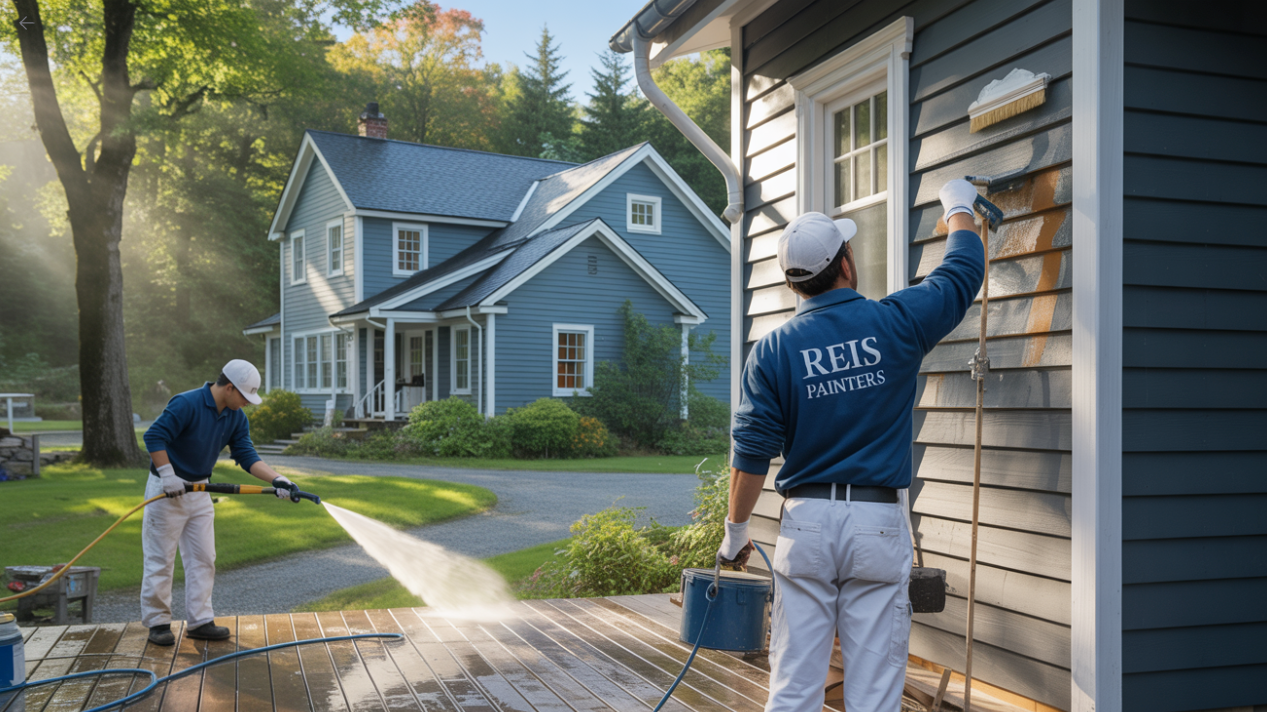
- Integrated Services: We combine soft-wash and pressure-wash prep with full painting services.
- Local NH Expertise: We understand New Hampshire weather cycles and material behavior.
- Safe, Tested Methods: We always perform test spots on painted areas and protect your home’s finishes.
- Free Estimates & Consultations: Tailored guidance on timing, method, and surface suitability.
📞 Ready to Prepare Your Home the Right Way?
Whether you’re prepping for a fresh paint color or just enhancing curb appeal:
Call Reis Painters today for a free exterior cleaning consultation.
📍 Serving Portsmouth, Exeter, Dover, and all of southern New Hampshire
📞 (603) 820-5943 | 🌐 reispainters.net